
The Westerners
Mythmaking and Belonging on the American Frontier

I don't think any region has drawn our attention as much as The West. This is especially true when we think about pop culture. I mean, there's an entire film genre called westerns.1 There's country & western music. This doesn't really exist for other parts of the country. No one is rushing home to watch Tales of Vermont. Other parts of the world are equally as fascinated with the West as we are. Stories about Indigenous people have long been popular in Germany. Japanese media fused that nation’s long history with American mythology to create new films in the mid 20th century, which then went on to influence American filmmakers such as George Lucas. Star Wars, my friends, is a western.
I talk here about pop culture because so much of how we think about ourselves is reflected through movies and tv shows and music. And like it or not, so much of what we understand comes not from books but through those mediums. The Western genre is particularly good at this, painting pictures about our past, and therefore, ourselves that we like to see- the lone cowboy on the range, conquering the frontier with just his wits alone.2
This can be pretty dangerous. When I was in grad school I listened to my advisor give a masterclass lecture on how this imagery fed the beliefs of people like Ammon Bundy, who you probably remember from his attempts to take over Malheur National Wildlife Refuge in Oregon a few years back. Dudes like Bundy bought into these stories, credentialing themselves as the next in a long line of Jeremiah Johnsons as sold to them by Robert Redford. They didn't owe anything to the government, nor need heed the will of the people, since they had cut the West out for themselves.
Of course, this is all bunk. And we know that to survive in the West in the 19th century meant depending on the efforts of a multitude of men and women, many of whom were wildly different than oneself. We know that the West was an incredibly diverse space, with agendas to match. The problem is that we don't always get historians with the skill sets to tell these stories.
Enter Megan Kate Nelson. There's a decent chance you've read her before. Her The Three Cornered War was nominated for a Pulitzer, and any fan of public lands likely owns Saving Yellowstone.
The West is dear to Megan. She's from Colorado originally and on more than one occasion encouraged me to give it a chance when I struggled adapting to the place. The point is that she writes passionately about a place that few know so intimately. And with her new book, The Westerners: Mythmaking and Belonging on the American Frontier, Megan aims to tell new stories—and retell a couple older ones—about seven surprisingly interconnected people that helps to reveal the depth and complexity of this place in a particularly pivotal moment in time.
I'm not going to claim to be unbiased. Megan is a friend of mine, but that's because she's damn good people who happens to be a damn good storyteller.
But I went into this book hoping to learn more about the West, and I did. I don't want to ruin anything for you here, but the stories are complicated. There's one guy I found myself rooting for, up until he willingly participated in a massacre. Then there's the woman who manages to become a powerful figure in the Southwest. Denver emerges in Megan's book as a city as important to the American narrative as New York, Chicago, or San Francisco. And for me, every single nation that I work with out there—Kiowa, Comanche, Jicarilla Apache, Ute, Cheyenne, Arapaho—is in this book, and not in a tokenistic way. The people here are real, as are the decisions they make, meaning sometimes we don't like them after all.
And I think that's the brilliance of this book. No one is getting lionized here. These are just humans, but their lives help us to understand our own.
Naturally, I had to have Megan come on the pod. No movie this time, just a straightforward talk about her work and the place that binds us together.
About our guest
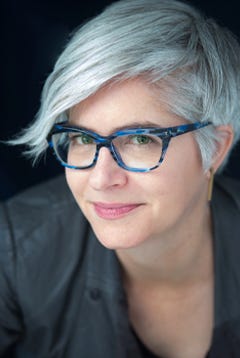
Megan Kate Nelson is a historian, cocktail enthusiast, Pulitzer Prize finalist, and the author of five books.
Her new book, The Westerners: Mythmaking and Belonging on the American Frontier tells two richly detailed and interwoven stories.
The first reveals the captivating lives of women and men moving through the American West — Indigenous peoples, Black Americans, Mexican Americans, and Canadian and Asian immigrants—in the nineteenth century.
The second tracks the attempts of many Americans to remove these westerners from history, through a frontier myth that lionized individualism and conquest and celebrated white settlers traveling west in search of prosperity.
The Westerners is one of LitHub’s Most Anticipated Books of 2026!
Megan is also the author of The Three-Cornered War: The Union, the Confederacy, and Native Peoples in the Fight for the West, which was a 2021 Pulitzer Prize finalist in History, and Saving Yellowstone: Exploration and Preservation in Reconstruction America, winner of the 2023 Spur Award for Historical Non-Fiction, as well as Ruin Nation: Destruction and the American CIvil War, and Trembling Earth: A Cultural History of the Okefenokee Swamp.
A fellow of the prestigious Society of American Historians, Megan is also a regular guest on radio shows and TV documentaries about U.S. Western history and popular culture. She has recently become a podcast host, interviewing book authors as part of the “Historians and their Histories” podcast for the Massachusetts Historical Society.
Megan also writes about the Civil War, the U.S. West, and American culture for The New York Times, Washington Post, The Atlantic, Smithsonian Magazine, Slate, and TIME.
Before leaving academia to write full-time in 2014, Megan taught U.S. history and American Studies at Texas Tech University, Cal State Fullerton, Harvard, and Brown. She earned her BA magna cum laude in History and Literature from Harvard University and her PhD in American Studies from the University of Iowa.
Born and raised in Colorado, Megan now lives in Boston with her husband and two cats.
The book:
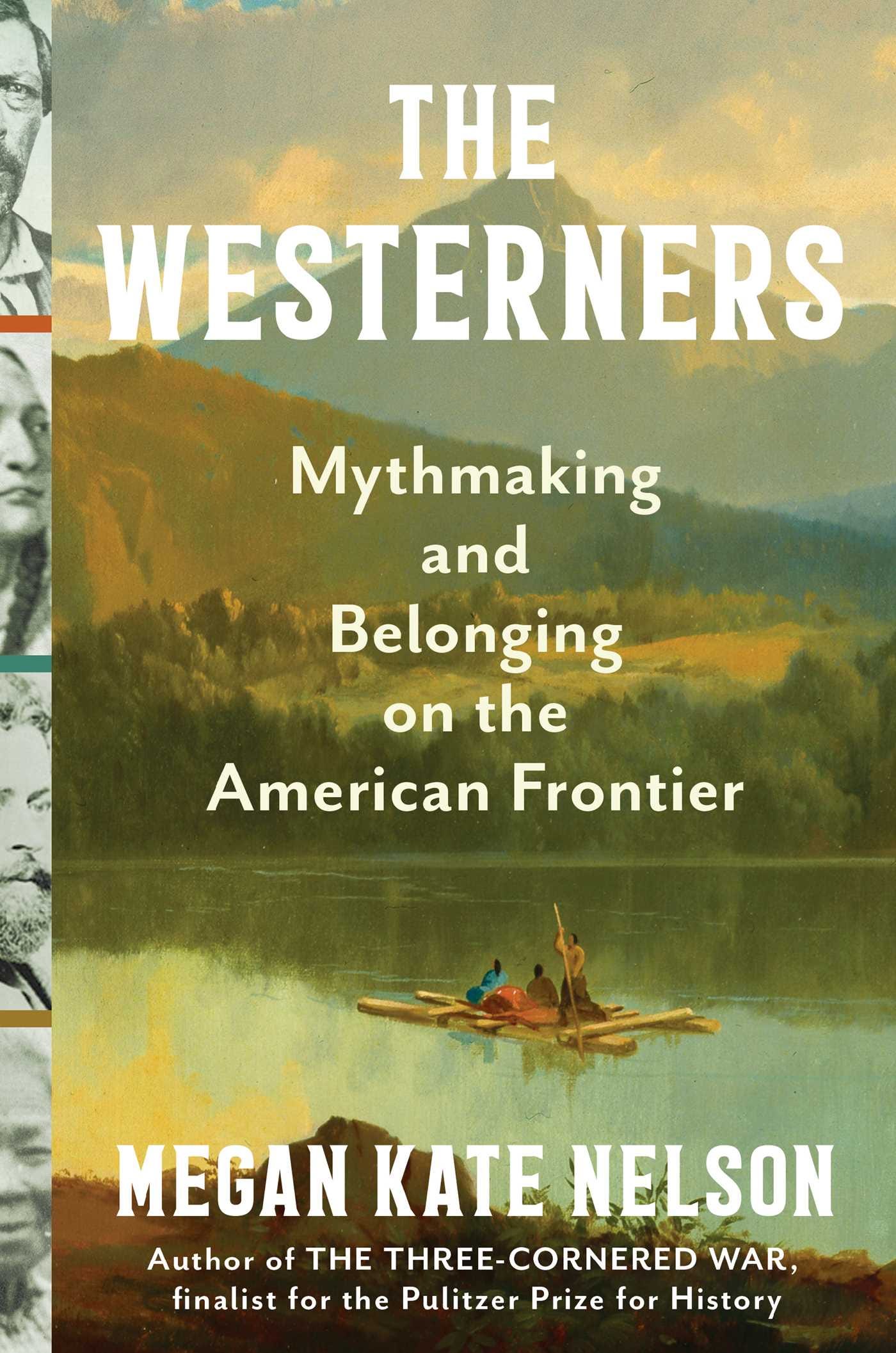
Find The Westerners here or wherever you get your books. Available now.
The Pod
Wanna listen in? Find my discussion with Megan Kate Nelson on Apple and Spotify below or wherever you listen to your podcasts. Like it? Subscribe.
Hey, thanks for reading this and thanks for being here. I’m glad you’re part of this. See ya tomorrow.
Jason
if you're like me, you grew up sitting next to your grandfather watching them on television
There have been some really bad histories that do this too—David McCullough's The Pioneers—was especially heinous.