
Returning Home
A week with Comanche and Southern Ute youth on the Front Range, where ancient relationships continue to shape the future.

So we’ve been busy around here and it’s good to get back in front of the keyboard to share some of the work I’ve been doing.
Two weeks ago we welcomed Comanche and Southern Ute teens to Pike National Forest for our second annual Tribal Youth Encampment. This is a big deal for me, and the highlight of my year working for the Forest Service. The idea originated a couple years ago when I met with the Comanche Business Council in Lawton, Oklahoma and an elder told me of his desire for Comanche kids to know that their homeland was far more than south central Oklahoma. I told him that we could do that and working closely with the Comanche National Tribal Historic Preservation Office, we hosted our first encampment in 2025. It was a huge success.
This year, as we planned another camping trip, my friend Martina, the director of the Tribal Historic Preservation Office, said she wanted to invite the Southern Ute Indian Tribe to camp with them, so I jumped at the chance to expand upon last year’s event.
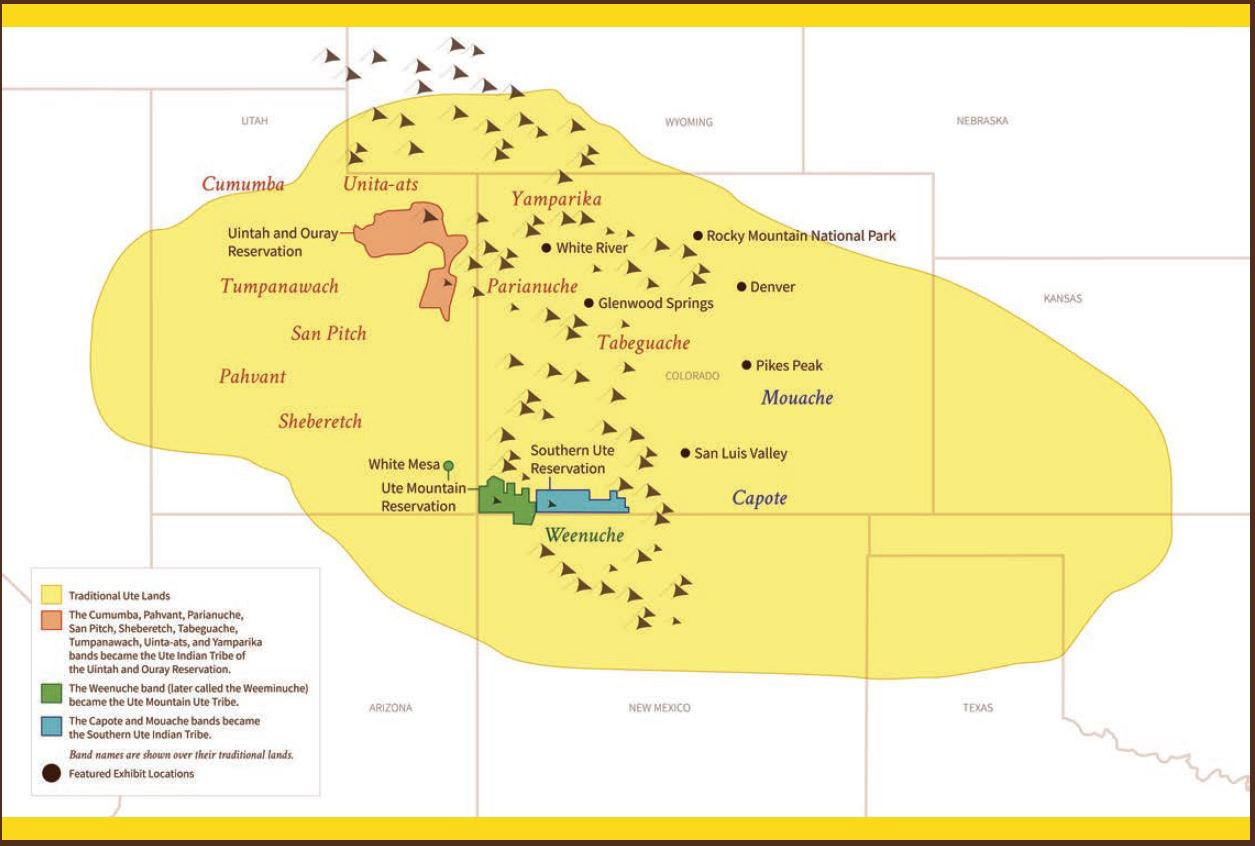
Bringing both Tribes together is a big deal. Most everyone out here knows everyone else. But Comanche Nation and the Southern Ute Indian Tribe have a special relationship when it comes to Colorado. Both nations share interconnected histories filled at times with peace, trade, warfare, but most especially an affinity for the spaces out here in the West. Plus, next year is the fiftieth anniversary of the Comanche-Ute Peace Treaty of 1977, so we all thought this would be a cool oppotunity to work towards that.
I myself have a great affinity for both nations. Folks at the Southern Ute Indian Tribe were really the first to welcome me out here once I moved to Colorado, and I relish every chance I get to visit with them out in Ignacio. And Comanche Nation has been just as welcoming. I know a lot of the elders there and Chairman Tahdooahnippah was even kind enough to come on the podcast and talk some Comanche history with me. So I was excited to see my friends.
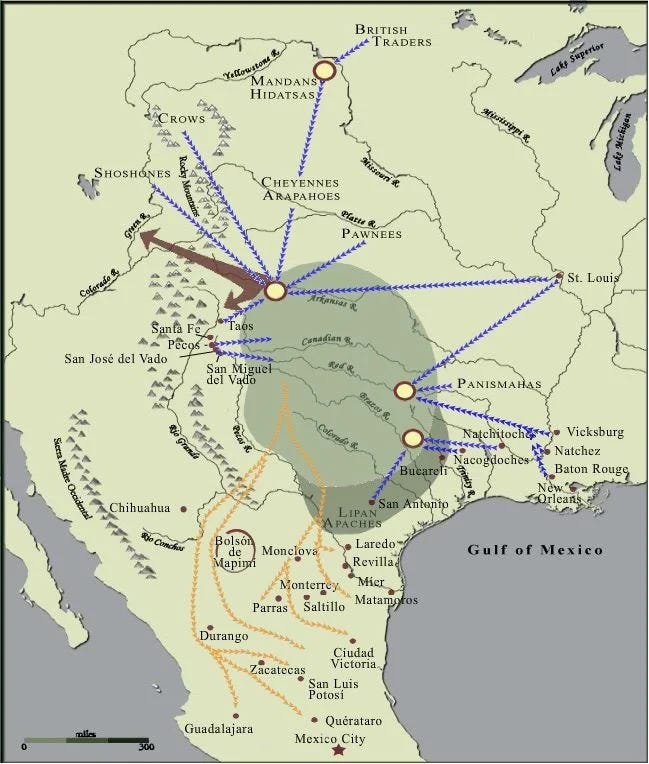
Working with our staff, we identified a great campsite at Manitou Lake, which is west of Colorado Springs, and near the town of Woodland Park. It’s probably a good time to, yes, hit you with some history. (This is just a quick one, though.) Colorado, especially what we call the Front Range, is home to a LOT of Tribes. In addition to Ute and Comanche peoples, folks in the Cheyenne, Arapaho, Kiowa, Pawnee, Jicarilla Apache, and number of Puebloan communities have ties to the region. That makes it a special place.
Okay, nerdy history stuff over. Let’s talk camping. I was being a social butterfly helping to get everyone situated so it was exciting to see that the Comanche campers brought with them two tipis that they set up. I got to help put one up, filling the role of “rope man” in which I generally ran around the tipi poles with a rope and tried not to make the whole thing collapse. Miraculously, I did not screw up.
All kidding aside, this was an awesome opportunity for community building (have you ever helped put up a tipi?) and more importantly, for the youths to learn really important aspects of their culture. And seeing it come together was really cool.


Morning rose, and after breakfast we all make our way to Crags Trail, one of my favorite in Colorado. This was an opporunity for the teens of both Tribes to get to know one another a little bit and to get to see some of these amazing spaces here in Colorado, some for the first time. Crags can be a challenge for people. There’s some serious elevation gain, but both Ute and Comanche teens handled it like champs. And we, along with my friend Jenn from the National Forest Foundation, enjoyed the trail, talking with Southern Ute THPO Deputy Director Isabella Cloud about the importance of protecting these spaces. And the pics, as always, just don’t do these places justice.


The next day we decided to go even higher to Pikes Peak, which is always a highlight of the trip. The road was under refurbishment so they weren’t letting any drivers up there, but the management on the mountain really cares about their relationships with the Tribes, so they made an exception for us. That meant that the teens were able to be among the only people on the peak, and got see the world from a pretty sacred place.
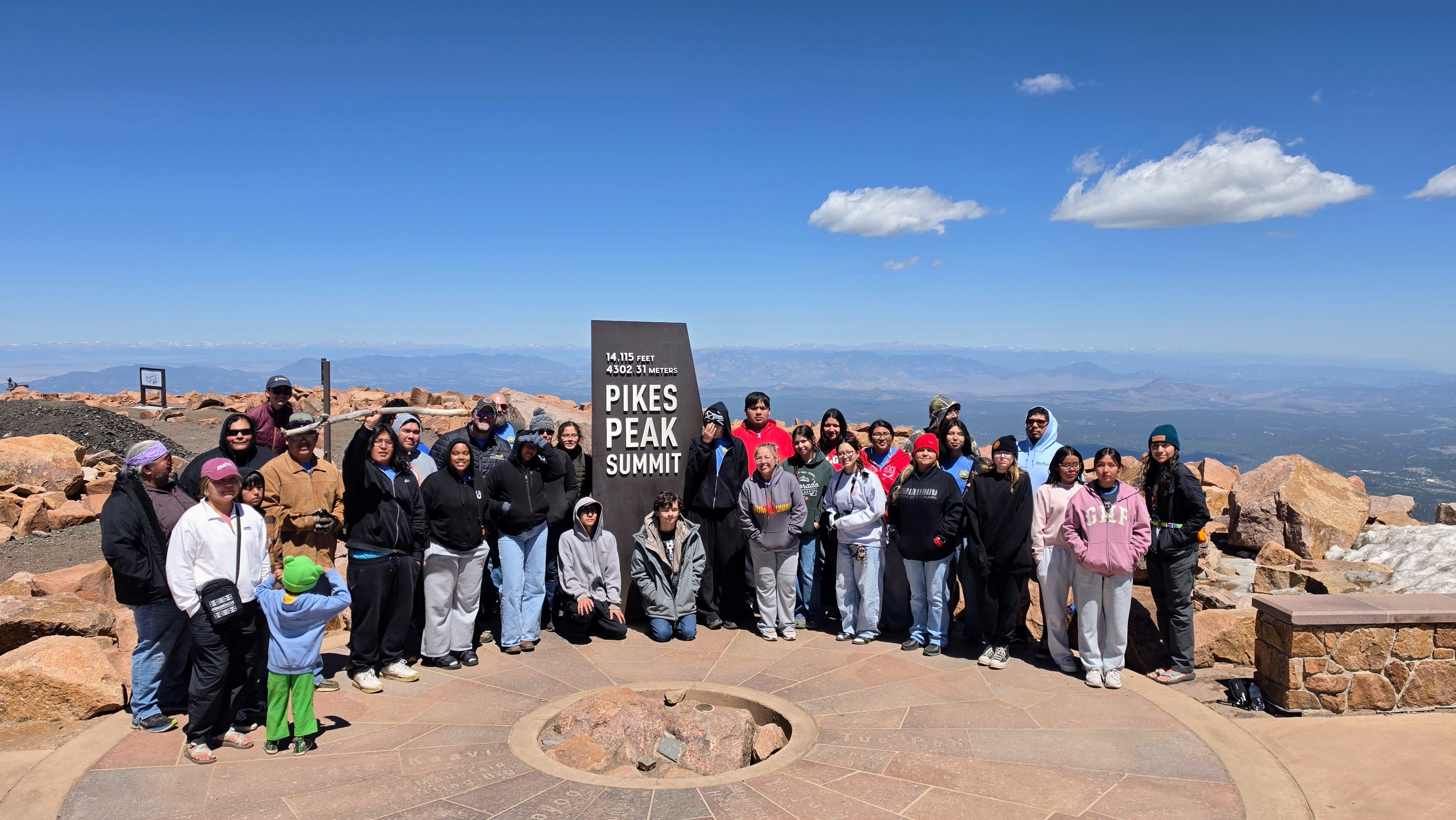
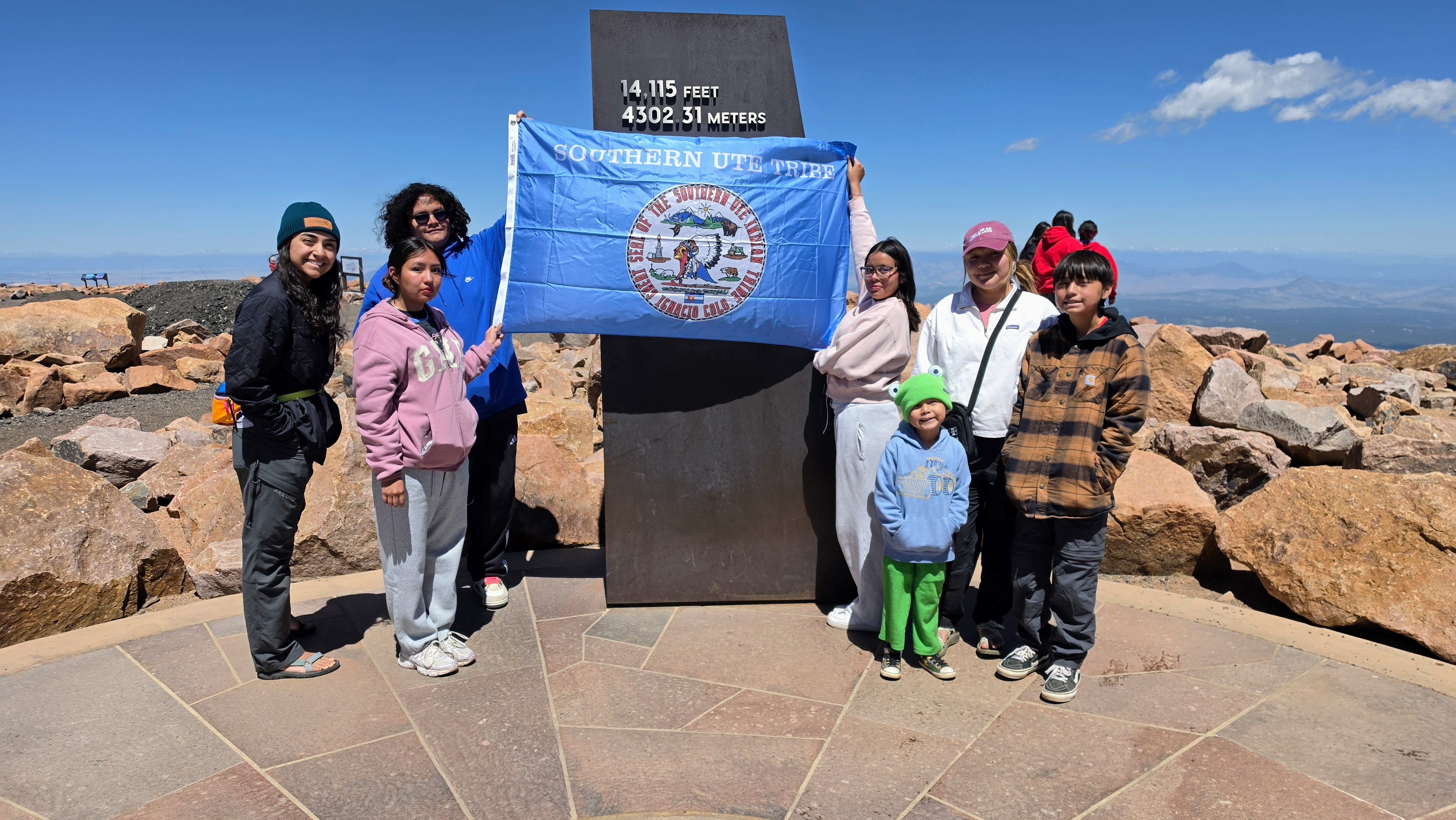
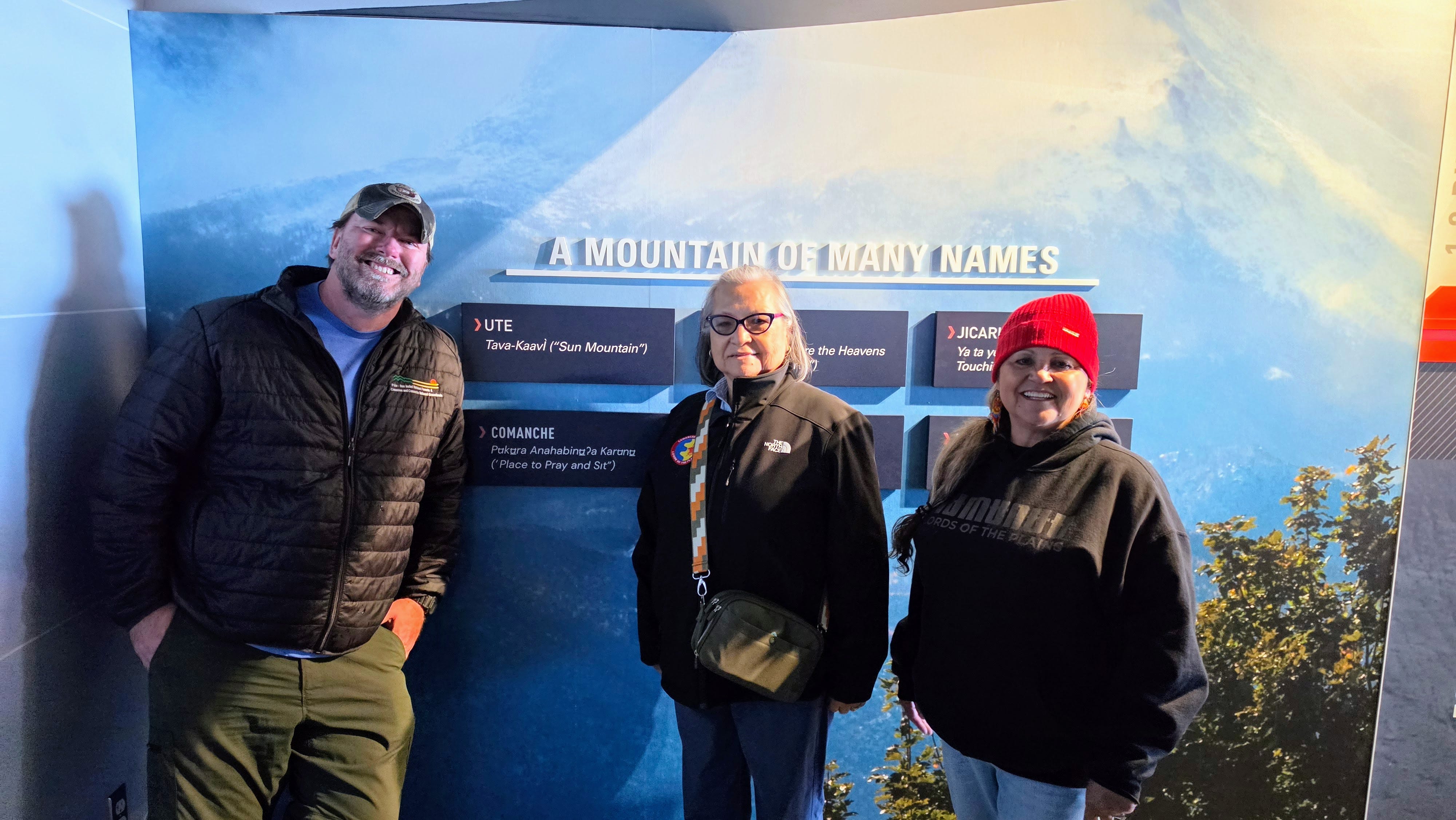
I had also worked with the Comanche Nation Language Department in the previous year to get the Comanche name of the mountain up there, so we stopped to take a pic of our work:
Aftwards, we made to the Colorado Springs Pioneers Museum how the three Ute tribes (Southern Ute Indian Tribe, Ute Mountain Ute Tribe, Ute Indian Tribe of the Uintah and Ouray Reservation) worked with the museum to tell their stories and then on to Garden of the Gods for some spectacular scenery. But by the evening, we were all gassed.
My favorite part is always back at the camp. I must admit that I worried about visiting with either Tribe too much because I love both of them dearly. But I reminded myself to get out of my own head and just enjoy listening to the young folk practice their language, singing, sharing food, and playing hand game.


There’s so much here I’m not telling you, mostly because those memories get to stay with us and between us. But the story here that I want to continue to tell you, is about working with Tribes and being part of something larger than yourself.
I hope most of all the kids and adults took away new friendships and memories that will stay with them well past this summer. And hopefully the affection I have for all of them.
Amy saw the pictures I sent her while I was with the Tribes. She had a single thought:
“So there’s your smile.”
Thank you for following your instincts and working with these kids - they’ll never forget how much you cared.
Thank you for sharing a wonderful story about community and of course the wonderful pictures 😁