
Coyote America
A conversation with Dan Flores on history, myth, and the wildness that endures

My favorite two lines ever written—not in a history book, but any book, ever—are as follows:
There are two perfect words for their kind of callous disregard for life, for an attitude that regarded two or three years of returns worth leaving behind a putrid desert of rotting carcasses and blowflies and a deprived posterity.
Fucking pathetic.
That’s historian Dan Flores, writing about the violent market hunting and near extirpation of bison from the Great Plains in his tour de force, Wild New World: The Epic Story of Animals and People in America. By the time I read that line in 2022, Flores had already solidified himself as my favorite historian. But reading that line sent a shockwave through my system. We can write like that? After years of graduate coursework with enough jargon to fill my Mimaw’s cookie jar, it felt so liberating to see a historian writing with such conviction.
This motherfucker calls it out!1 This is what we need to be.
I was invigorated. Reading Flores’ work filled me with purpose. I wanted to do what he was doing out West only back in Florida. Dan was writing about bison and coyotes and Comanches; I was writing about cattle and alligators and Seminoles. The path was clear.
I first became aware of Dan’s work while driving across the country listening to Joe Rogan (I know, I know). Here was this dude telling stories of charismatic megafauna—a term I’d never heard before—along with how humans engaged with them and in the process shaped the world as we know it. By then I’d started my turn towards environmental history. Alfred Crosby’s The Columbian Exchange hooked me, and then Elinor G.K. Melville’s A Plague of Sheep reeled me in. And J.R. McNeill’s Mosquito Empires pretty much fileted me right on the dock of historical intervention.2 But what I was missing was a guide to talking about the relationship between Indigenous people and the natural world. Dan’s article “Bison Ecology and Bison Diplomacy: The Southern Plains between 1800 and 1850” offered such a model. I soon gobbled up everything I could find with his name on it, alongside historians of the Native South like Josh Piker, Robbie Ethridge, Greg O’Brien, and Andrew Frank.
Dan’s work became a key component of my teaching curriculum. One of the difficult things in teaching early American history is knowing where and when to start. Traditionally people do the thing where they talk about Native people and harken to some damn landbridge, but where else do people do that? They sure as Hell don’t start French history in Africa. That felt wrong. No, I think to tell the history of a people, you have to talk about the place. Besides, land informs identity. Ask anyone who they are and the first thing they’ll tell you is where they’re from. So if we want to know American history, we need to know America. Dan’s American Serengeti: The Last Big Animals of the Great Plains proved immensely popular with my students. They loved the serial nature of each chapter that focused on different animals like pronghorn antelopes, grizzly bears, or coyotes. And I, of course, regaled in telling them about steppe lions and how if my students lived in the Pleistocene, they’d never make it to the mailbox.3
But all of this gets us back to his most well known book: Coyote America: A Natural and Supernatural History. When it was first published in 2016, the book radically altered Americans’ interest in and perceptions of the continent’s most notorious rascal. As Dan points out, the residents of North America have maintained wildly differing relationships with coyotes. The often appear in Indigenous origin stories and tended to be respected by those respective cultures. Americans, on the other hand, waged a violent and ultimately unsuccessful war of eradication on the animal. Coyotes, Dan points out, are the continent’s great survivors. And that means they are worthy of another look. What you’ll find in the pages of Coyote America isn’t just the story of an animal, but histories of the stories we tell ourselves about the world around us and our place in it. It is an intoxicating read.
You probably know of Dan’s work already. In addition to the Joe Rogan Experience, he’s been on Anthony Bourdain’s Parts Unknown, along with Ken Burns’ documentary on the American bison. More recently, he’s been a steady contributor to the Meateater empire, headed by his former student Steven Rinella. In addition to the books I’ve mentioned, Dan now has his own podcast, The American West with Dan Flores that tells a different history than the ones you probably grew up with. Unsurprisingly, it remains my favorite pod and I have more than once turned it on during long, lonely drives through Colorado as I fought to establish my place and my peace in the West.
We don’t have enough space here for me to talk about the legions of Dan’s fans, though I can assure you the enthusiasm amongst my readers and social media followers when I announced he was coming on was unlike any before him. What I can tell you is that I have admired Dan Flores for years, attempted as best I can to emulate his work, and am now damn proud to call him a friend. Our conversation today talks about Dan’s work with Coyote America, along with his numerous other books, his thoughts on conservation, the role of historians in shaping public policy, his relationship with Steven Rinella, and so much more. This episode has been in the works for about a year and a half and I am so grateful to Dan for making the time and I am so excited to share it with you now.
About our guest
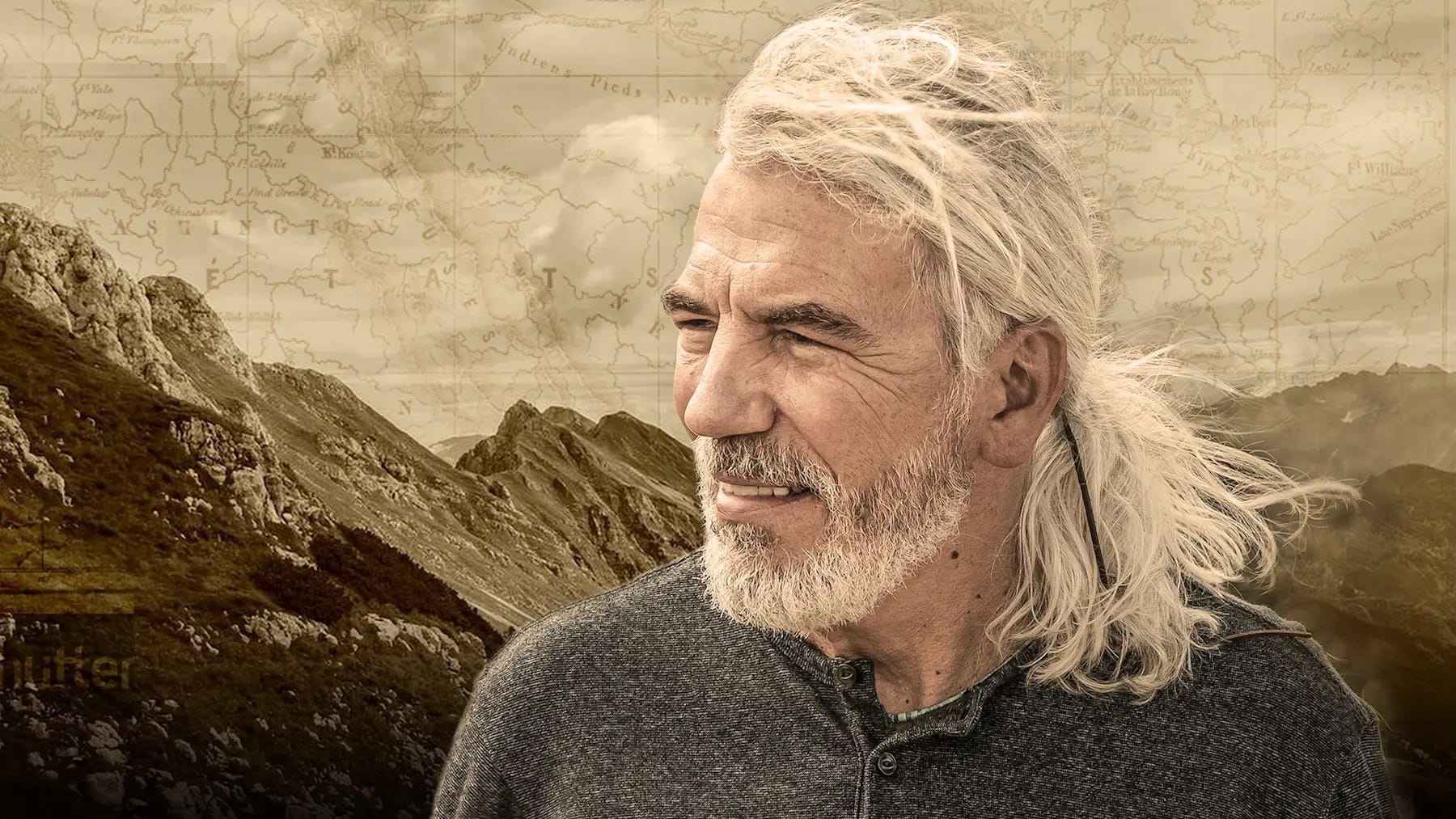
Dan Flores is a Santa Fe, New Mexico, writer originally from Louisiana who spent much of his academic career at the University of Montana. The author of 11 books, he has written for the New York Times, the Los Angeles Times, the Chicago Tribune, and Time Magazine. Along with appearances on Anthony Bourdain’s Parts Unknown on CNN and Joe Rogan’s podcasts, Flores was also featured in Ken Burns’s 2023 American Buffalo documentary. His most recent books are American Serengeti, winner of the Stubbendieck Distinguished Book Prize in 2017; Coyote America, winner of the Sigurd Olson Nature Writing Prize, Finalist for the 2017 PEN/E.O. Wilson Literary Science Writing Award, and a New York Times bestseller; and Wild New World, winner of the 2023 Rachel Carson Environment Book Prize, winner of the 2023 National Outdoor Book Award for Natural History Literature, and Finalist for Phi Beta Kappa’s Ralph Waldo Emerson Prize.
The book
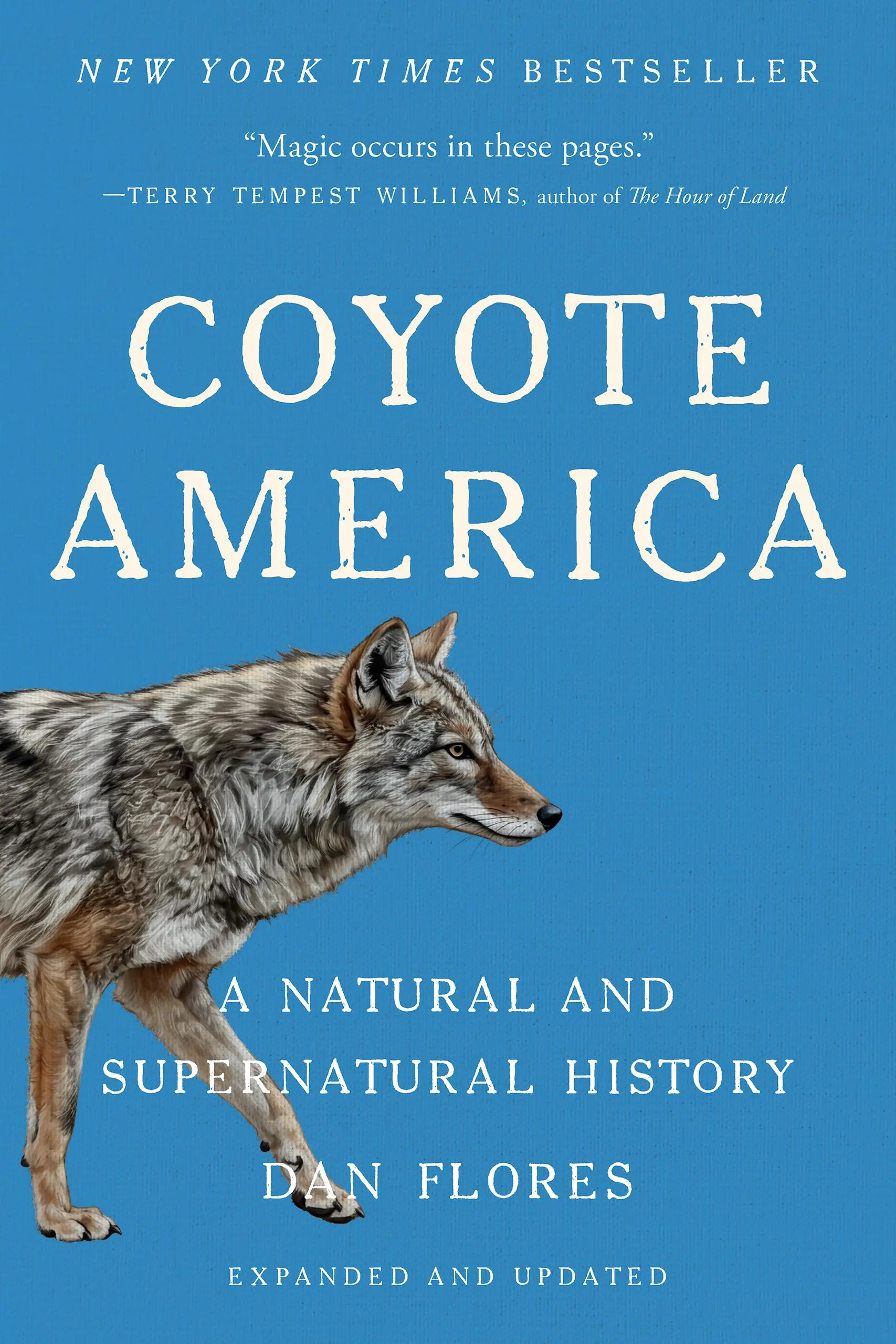
Get Coyote America: A Natural and Supernatural History at this link or wherever you you get your books. Hell, buy them all. I did.
The Pod
Without further ado, check out my conversation with Dan Flores on Apple and Spotify below or wherever you listen to your podcasts.
And yes, absolutely check out Dan’s podcast below:
One more thing
I think right now this substack has just over 40,000 subscribers (thank y’all for that). Typically, I’d throw this behind a paywall, but I thought there are some folks who don’t subscribe to podcasts but might still like to listen to my conversation with Dan. So below, you can find the entire conversation. And if you dig it, subscribe to the pod because we have a bunch of episodes like it coming up.
Alright, that’s enough for tonight. I hope you enjoyed this episode as much as I did in bringing it to you. If you like it, please share it. We’re growing, baby.
Jason
Sorry for calling you that, Dan. I didn’t know you then.
Yes, I’m playing hard and loose with the analogies here, but it’s late and I’m trying my best. Don’t filet me too.
I somehow possess a bunch of teaching awards. Weird.